
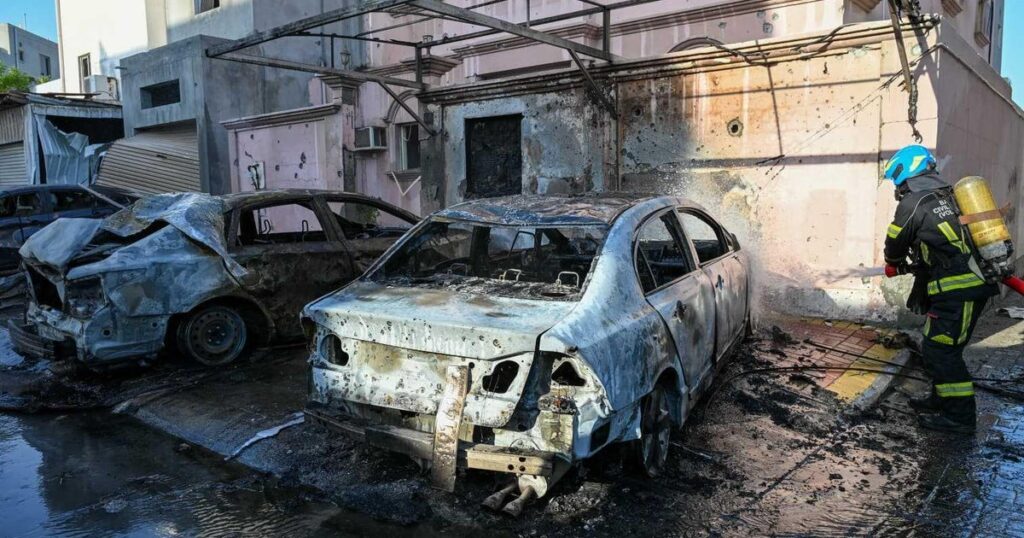
Escalating Tensions in the Middle East: The United States and Iran have engaged in a fresh round of aerial strikes and diplomatic pressure, marking a significant escalation in the ongoing conflict between the two nations. The latest developments come as President Donald Trump expressed frustration over the slow pace of negotiations, warning that US attacks could resume if a deal isn’t reached. In a series of coordinated strikes, Iran’s Revolutionary Guards targeted American bases in the region, prompting air defenses to be activated in Kuwait, Bahrain, and Jordan, where 20 missiles were intercepted. The strikes, which began on the second night of US attacks, have sparked widespread concern in the international community, with the Strait of Hormuz – a critical waterway for global oil supplies – at the center of the crisis. As tensions continue to rise, the world watches with bated breath, waiting to see how this latest chapter in the US-Iran conflict will unfold.
US and Iran Trade Fresh Round of Aerial Strikes
The situation in the Middle East has taken a dramatic turn as the United States and Iran have traded fresh rounds of aerial strikes. The attacks began with US strikes across Iran, targeting key locations near the Strait of Hormuz. Iran’s Revolutionary Guards responded with retaliatory strikes, targeting US bases in the region. The strikes were confirmed by Iranian officials, who stated that the country’s air defenses were activated in Kuwait, Bahrain, and Jordan, where 20 missiles were intercepted.
The US military has confirmed that its forces were targeted by Iranian missiles, but the extent of the damage is still unclear. Explosions were heard across Iran, including in a string of key locations near the Strait of Hormuz. The US has warned that its military may again target critical infrastructure in Iran if a deal is not reached. Meanwhile, Iran has claimed that the Strait of Hormuz is closed until further notice, citing the exchange of fire with the United States. The strait authority has asked applicants who have received a transit permit to be patient and await further guidance.
Diplomatic Talks Under Pressure Amid Escalating Tensions

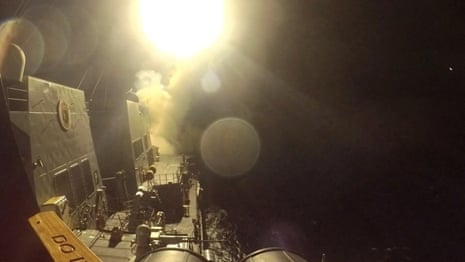
The recent strikes have significantly complicated the diplomatic efforts, with both sides struggling to find common ground. The US has made it clear that it will not back down, and President Trump has warned that military action could resume if a deal is not reached. The Iranian government has also signaled its willingness to continue negotiations, but the ongoing tensions have raised concerns about the feasibility of a peaceful resolution.
As the situation continues to unfold, the international community is watching with growing concern. The diplomatic efforts are facing significant pressure, and it remains to be seen whether the two sides can find a way to de-escalate the situation and move forward with meaningful negotiations.
Trump Expresses Frustration Over Slow Pace of Negotiations


President Donald Trump expressed frustration over the slow pace of negotiations between the US and Iran, warning that US attacks could resume if a deal isn’t reached. “We’re not going to be held hostage to a very weak and ineffective negotiating process,” Trump said, emphasizing the need for a swift resolution to the ongoing crisis. The President’s comments come as diplomatic efforts continue, with a Qatari delegation having left Tehran after negotiations with Iranian officials.
Trump’s warning that the military may again target critical infrastructure has raised concerns about the potential for further escalation. The President’s statement suggests that the US is prepared to take more aggressive action if the negotiations do not yield a satisfactory outcome. This development has put additional pressure on the diplomatic talks, which have been ongoing for several days. The Qatari delegation’s departure from Tehran has sparked speculation about the prospects for a breakthrough in the negotiations.
The slow pace of negotiations has been a major point of contention between the US and Iran. Trump’s frustration with the process is evident in his comments, which suggest that the US is willing to take a more assertive approach to achieve its goals. As the situation continues to unfold, the international community is watching closely to see whether the diplomatic efforts will yield a resolution to the crisis.
Tehran Targets American Bases in Retaliation
Iran’s Revolutionary Guards said they carried out retaliatory strikes targeting US bases in the region. According to reports, air defenses were activated in Kuwait, Bahrain, and Jordan, where 20 missiles were intercepted. The strikes marked a significant escalation in the conflict between the two nations.
The targets of the Iranian strikes were not specified, but it is believed that key locations near the Strait of Hormuz were among those hit. The Strait of Hormuz is a critical waterway that connects the Persian Gulf to the Gulf of Oman, and its closure would have significant implications for global oil supplies. In response to the US strikes, Iran had earlier announced that the Strait of Hormuz would be closed until further notice, citing the exchange of fire with the United States.
Details of the Iranian strikes are still emerging, but it is clear that the conflict between the US and Iran is intensifying. The recent strikes have raised concerns about the potential for further escalation, and the international community is closely watching developments in the region.
Regional and Global Implications of Escalating Tensions
The escalating tensions between the US and Iran have significant regional and global implications, with far-reaching consequences for international relations and global security. The Strait of Hormuz, a critical waterway for global oil trade, has been closed by Iran until further notice, in response to the US strikes. This move could lead to disruptions in global energy supplies, impacting economies and trade relationships worldwide. The closure of the Strait of Hormuz also raises concerns about the potential for further escalation, as both countries continue to exchange fire.
The implications of this conflict extend beyond the Middle East, with the potential for a wider regional conflict drawing in other countries, including those with significant military presence in the region. The involvement of countries like India, which has seen its seafarers caught in the crossfire, highlights the potential for global repercussions. Furthermore, the conflict has significant implications for global security, with the potential for a wider conflict drawing in other countries, including those with significant military presence in the region. The international community is closely watching the situation, with many countries calling for restraint and a peaceful resolution to the conflict.
The global community is also watching the impact on international relations, with the US and Iran’s relations reaching a new low. The conflict has significant implications for the global balance of power, with the potential for a wider conflict drawing in other countries, including those with significant military presence in the region. The international community is closely watching the situation, with many countries calling for restraint and a peaceful resolution to the conflict.
What’s Next for US-Iran Relations?
The ongoing conflict between the US and Iran has left many wondering what the future holds for their relations. As tensions continue to escalate, the likelihood of further escalation remains high. President Trump’s warning that US attacks could resume if a deal isn’t reached has added to the uncertainty, making it increasingly difficult to predict a peaceful resolution.
The recent strikes and retaliatory measures have put a significant strain on diplomatic efforts, with negotiations between the US and Iran now under immense pressure. The slow pace of negotiations has been a major point of contention, with President Trump expressing frustration over the lack of progress. As the situation continues to unfold, it is essential to consider the potential next steps for US-Iran relations. A key factor will be the ability of both sides to find common ground and reach a mutually acceptable agreement. If this proves to be challenging, the situation may continue to deteriorate, leading to further instability in the region.
The regional and global implications of the escalating tensions between the US and Iran are far-reaching. The closure of the Strait of Hormuz, a critical waterway for global oil trade, has sparked concerns about the potential impact on international relations and global security. As the situation continues to unfold, it is essential to monitor developments closely and consider the potential consequences of further escalation.